Loading...
Serving Castro Valley, CA and surrounding areas. (510) 973-2948
Your foundation carries everything above it. In Castro Valley, clay soil and fault proximity mean it has to be built to higher standards than most places. We handle the design, the permits, and the inspections.
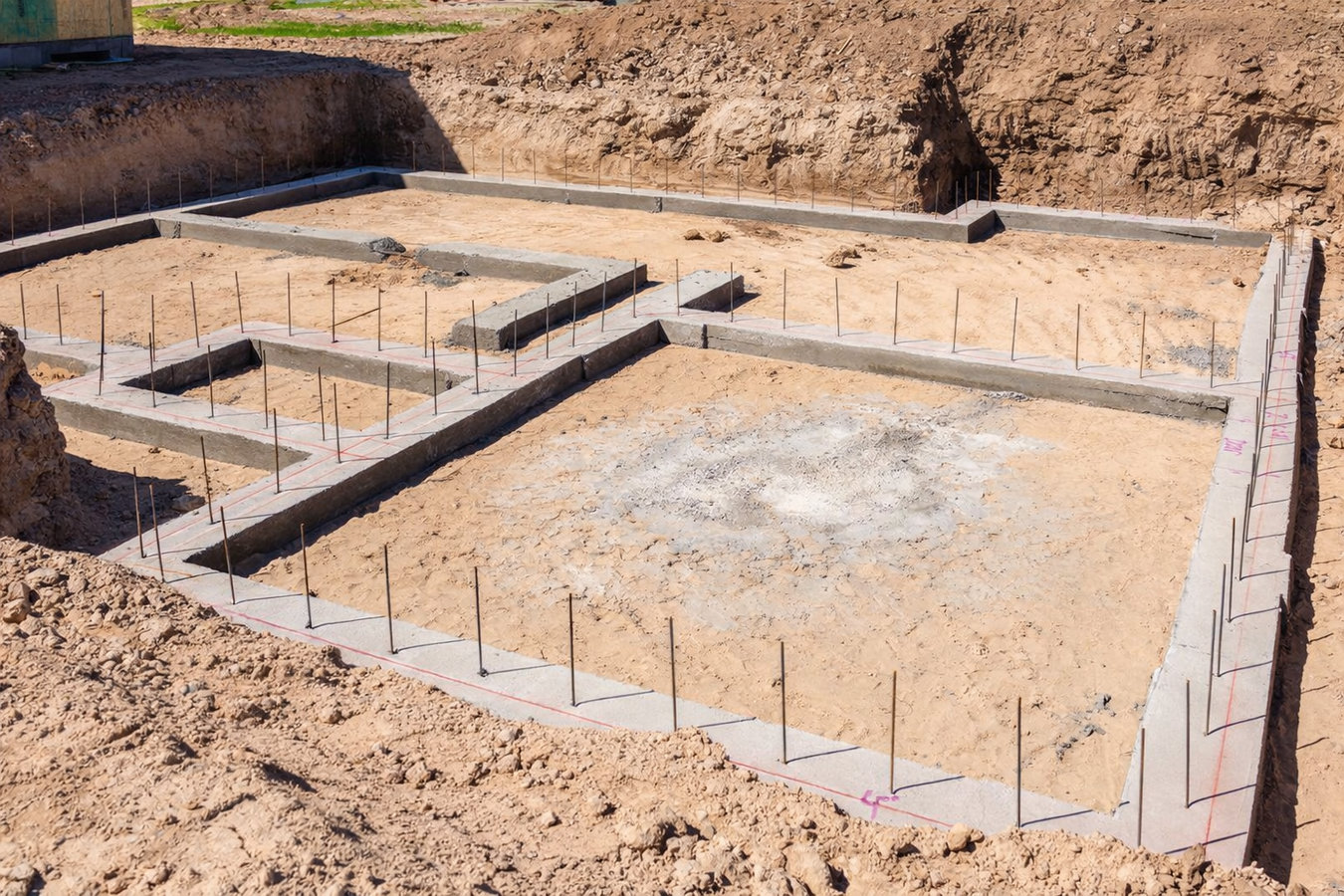
Foundation installation in Castro Valley transfers the full weight of your home down into the ground through reinforced concrete - most single-family projects take one to three weeks of physical work once permits are approved, with the full timeline from first call to final inspection typically running four to eight weeks.
Castro Valley homes were built mostly in the 1950s through 1970s, and many still sit on their original foundations. Those older foundations were not designed to current earthquake standards, and decades of clay soil movement have stressed them further. Whether you are replacing an aging foundation or installing a new one for an addition, the process here involves considerations that do not apply in most other parts of the country.
Many foundation projects connect with other concrete work. If you are adding a structure, pairing this with slab foundation building ensures the complete base is done correctly and passes Alameda County inspections in a single sequence.
If doors or windows have started sticking, jamming, or leaving visible gaps at corners, the structure is likely shifting. In Castro Valley clay-heavy soil, this kind of movement is common - the ground expands and contracts with the seasons, and over time that pushes a foundation out of level. It is worth having a contractor look before the problem gets worse.
Small hairline cracks in drywall are normal. Cracks wider than a pencil tip, diagonal cracks running from window and door corners, or cracks in your concrete floor or exterior stucco are worth taking seriously. These patterns often indicate the foundation is moving or settling unevenly beneath the home.
Many older Castro Valley homes have raised foundations with a crawl space underneath. If that space smells damp, shows standing water, or has wood that looks dark or soft, moisture is getting in. Over time, moisture destroys the wood framing that sits on top of the foundation - a common issue in the East Bay hills after wet winters.
Pay attention to whether your floor feels springy underfoot or slopes in one direction. A floor that used to feel solid but now has soft spots or a noticeable tilt is telling you something has changed below. In homes with older raised foundations, this often means the posts or beams supporting the floor have shifted, settled, or deteriorated.
Most Castro Valley homes sit on one of three foundation types - a raised foundation with a crawl space, a concrete slab poured directly on the ground, or in rare cases a basement. We install all three, and we coordinate the complete sequence from excavation through steel placement, the county pre-pour inspection, the concrete pour, curing, and final sign-off.
When the scope calls for additional structural concrete, we coordinate directly with concrete parking lot building and slab foundation building so sequencing is clean and no work gets done twice.
Suits homeowners building an addition, ADU, or completely new structure on a Castro Valley lot.
For older homes where the existing foundation is cracked, settled, or no longer meets current seismic standards.
Common in Castro Valley postwar homes - allows access to plumbing and wiring beneath the floor.
Best for new ADUs and additions where a flat, low-profile base is required and crawl space access is not needed.
Castro Valley sits in the East Bay hills on expansive clay soil that behaves differently from the sandy or loamy soil found in other parts of California. Clay swells in wet winters and contracts in dry summers, putting constant pressure on foundations over time. A contractor experienced in this area designs foundations to account for that movement from the start - including how deep the footings go and how drainage is managed around the perimeter.
Castro Valley is also close to both the Hayward Fault and the Calaveras Fault, and Alameda County enforces California seismic construction requirements through the inspection process. We serve homeowners throughout the region, including Hayward and San Leandro, and we know what the county inspector needs to see before the concrete goes in.
We will ask about your home and schedule a site visit - foundation work varies too much from property to property to quote over the phone. This first visit takes 30 to 60 minutes and costs nothing. We reply within one business day.
After the site visit we give you a written estimate that breaks down the work, materials, and total cost. Once you move forward, we handle the Alameda County permit application on your behalf. Permit review typically takes two to four weeks.
The crew excavates, sets up the steel reinforcement, and prepares the site. An Alameda County inspector visits before any concrete is placed to verify the work meets safety requirements. This inspection is required and cannot be skipped.
Concrete is placed and the foundation cures - plan for at least a week before any framing begins, and up to 28 days for full strength. A final county inspection closes out the permit. You receive a copy of the signed permit for your records.
No obligation. We visit your property, assess conditions, and give you a clear written quote - no sales pressure.
(510) 973-2948Castro Valley sits close to one of the most hazardous fault lines in the country. Every foundation we install meets California seismic requirements - with the reinforcement, footing depth, and connections that the Alameda County inspection process requires. We do not cut corners on this.
The expansive clay throughout Castro Valley shifts with every wet and dry cycle. We account for that movement in our designs - deeper footings, proper drainage management, and reinforcement sized for the actual soil conditions rather than a generic plan.
We handle the Alameda County permit application and coordinate the required inspections, and the permit is issued in your name. That documentation is valuable every time you refinance, sell, or make an insurance claim - unpermitted foundation work creates serious problems down the road.
We have been working on concrete foundations and flatwork across Castro Valley and surrounding communities for years. We know the permit process, the soil conditions, and what a finished project needs to look like to pass inspection the first time.
A foundation is not something you want to do twice. Call us or submit the form to get a written estimate and start your Castro Valley project the right way.
Commercial-grade concrete lots built for Castro Valley business properties and HOA communities.
Learn MoreNew slab foundations for ADUs, additions, and detached structures across Castro Valley.
Learn MoreOur calendar fills up fast in the dry season - lock in your start date before the rainy season arrives and your project gets pushed back.