Loading...
Serving Castro Valley, CA and surrounding areas. (510) 973-2948
Castro Valley clay soil shifts every season and the Hayward Fault is close by. Your slab needs to be built for those realities - with the right steel, the right prep, and a permit pulled in your name.
Slab foundation building in Castro Valley means pouring a single flat layer of reinforced concrete directly on prepared ground, with thickened edges that carry your wall and roof loads - most residential projects from permit to finished slab take three to six weeks, with the physical pour and cure taking one to two weeks.
If you are planning an addition, an ADU, or a new garage in Castro Valley, a slab is almost certainly where the project begins. The ground here - clay-rich East Bay soil that swells in winter and shrinks in summer - requires preparation steps that differ from what you would do in a drier, more stable region.
Once your slab is in, you have a solid starting point for framing above it. Many homeowners planning related structural work pair this with foundation installation or concrete footings depending on what the project requires.
If you are planning an ADU, addition, detached garage, or new structure, a slab foundation is almost certainly the starting point. In Castro Valley, ADUs have become increasingly common - and every one requires a permitted slab before anything else can be built. Getting a contractor involved at the planning stage saves time and avoids late-stage surprises.
Small hairline cracks in an aging slab are normal. Cracks wider than about a quarter-inch, diagonal cracks running from door corners, or cracks where one side sits higher than the other are signs the slab may have shifted unevenly. Castro Valley clay soil is a common driver of this movement - it is worth having a professional assess whether repair or replacement is the right answer.
When a slab settles unevenly, the structure above shifts too. Interior doors that used to swing freely but now stick or fail to latch, or gaps opening up between baseboards and the floor, are early warning signs that the foundation beneath may be moving. Catching this early is far less expensive than waiting until the movement gets worse.
If floors feel damp, flooring is bubbling or peeling, or there is a persistent musty smell near the base of walls, moisture may be wicking up through the slab. This is a known issue in parts of Castro Valley where older slabs were poured without an adequate moisture barrier. A new slab built to current standards includes a proper moisture barrier as a standard step.
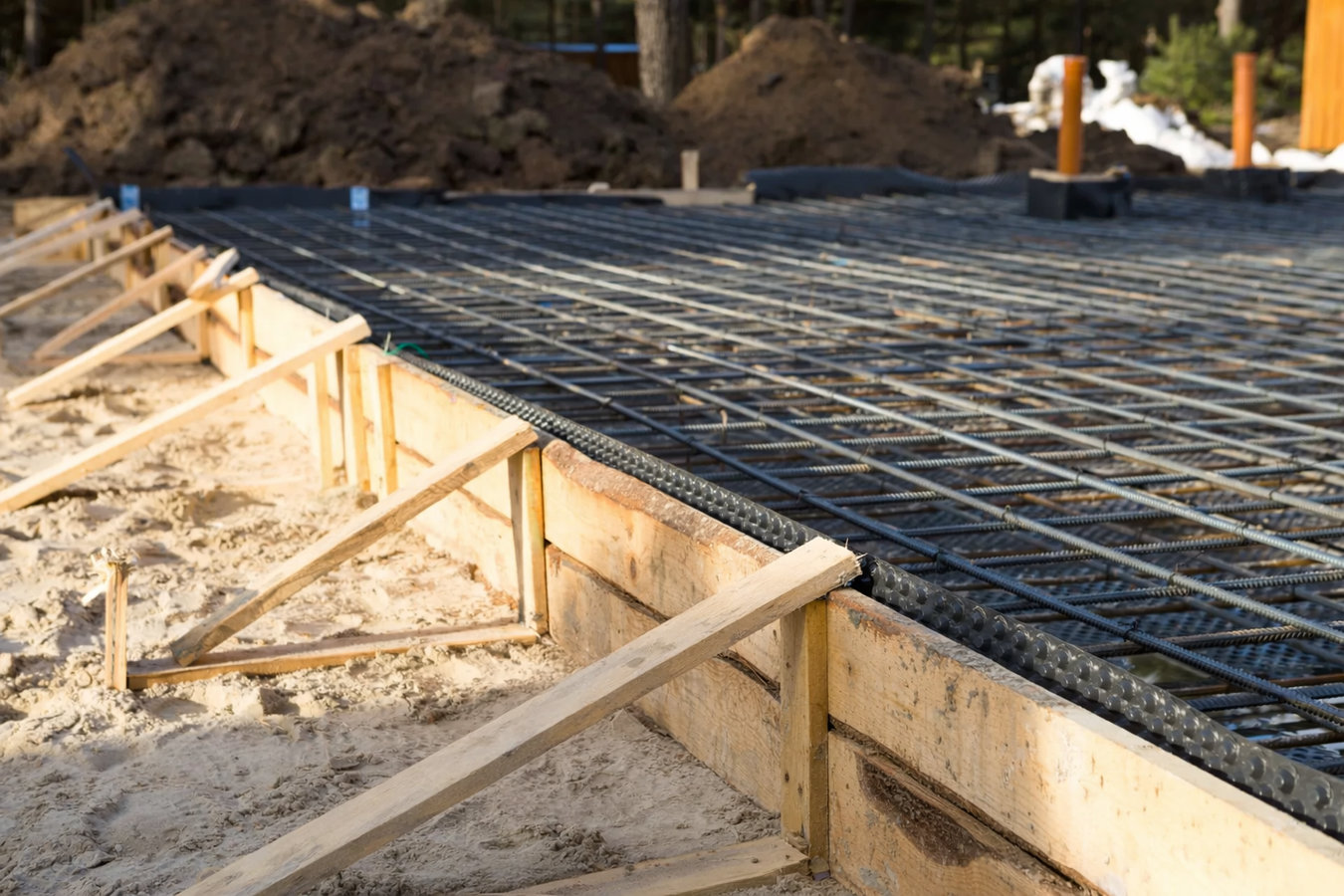
Every slab foundation project we build in Castro Valley starts with site preparation - grading the ground, compacting the soil in layers, laying a gravel base for drainage, and installing a moisture barrier before any concrete goes in. Steel reinforcing bars or welded wire mesh go in next, sized for the loads the slab will carry and for the seismic requirements the Hayward Fault zone demands.
We handle the complete scope from permit application through Alameda County Building and Safety, to the pre-pour inspection, to the pour itself, and final sign-off. When the scope calls for related structural work, we coordinate directly with foundation installation and concrete footings so everything is sequenced correctly and passes inspection the first time.
Best for homeowners adding an ADU, detached garage, or building a new home on a vacant Castro Valley lot.
Suits homeowners expanding an existing home - designed to match the height and reinforcement of the current structure.
For existing slabs showing serious cracking, differential settlement, or persistent moisture intrusion that repair cannot fix.
Purpose-built for accessory dwelling units, meeting Alameda County permit requirements and current seismic standards.
Castro Valley sits in the East Bay foothills on clay-rich soil that swells during winter rains and shrinks in dry summers. That repeated movement puts constant stress on concrete slabs. A contractor who understands this area will design deeper footings, specify more reinforcement steel, and sometimes call for a thicker slab overall - adjustments that add a bit of cost upfront but protect you from cracking and settlement problems down the road.
The proximity of the Hayward Fault means California seismic requirements apply with full force here, and Alameda County inspectors enforce those standards at the pre-pour inspection. We work throughout the area, including Dublin and Pleasanton, and we know what the county expects to see before the concrete trucks arrive.
We will ask a few basic questions about your project and then schedule a site visit - Castro Valley lots vary enough that a phone quote is rarely accurate. Expect the on-site conversation to take 30 to 60 minutes. We reply within one business day.
Once you are ready to proceed, we submit the permit application to Alameda County Building and Safety on your behalf. The permit is issued in your name. Review typically takes one to three weeks - we factor this into your project schedule from the start.
The crew grades the site, compacts the soil, lays the gravel base and moisture barrier, and sets the steel reinforcement. The county inspector visits to verify everything before any concrete is placed. No reputable contractor skips this step.
Concrete trucks arrive and the pour happens in a single day. The slab cures undisturbed for at least a week - rushing this is the most common cause of long-term cracking. After curing, the final inspection closes out your permit and you receive the paperwork.
Free on-site estimate. No commitment. We handle the Alameda County permit process from start to finish.
(510) 973-2948The Hayward Fault runs just a few miles from Castro Valley, and our slabs are built with the steel placement and construction details those conditions demand. This is not optional here - it is what passes the county inspection.
We handle the Alameda County permit application and coordinate the pre-pour inspection, and the permit is issued in your name - not ours. That documentation matters when you refinance or sell. We have verified this process countless times with Alameda County.
Older Castro Valley slabs were often poured without adequate moisture protection - and it shows up as peeling floors and musty smells years later. Every slab we pour includes a proper barrier, so ground moisture stays below your floor where it belongs.
We have been building concrete flatwork and foundations across Castro Valley and the surrounding communities for years. We know the soil, the slopes, and what the county inspector looks for before the pour.
Every one of these factors adds up to a slab you will not have to think about again. Call us or submit the form below to get a written estimate for your Castro Valley project.
Full-scope foundation replacement and new installation for Castro Valley homes.
Learn MoreProperly sized footings that carry wall and column loads safely into the ground.
Learn MoreAlameda County permit slots fill up during the dry season - locking in your start date now keeps your project on track.