Loading...
Serving Castro Valley, CA and surrounding areas. (510) 973-2948
Sunken or uneven slab? We lift residential foundations using mudjacking and foam injection, handle Alameda County permits, and address the soil issues that caused the settling.
Sunken or uneven slab? We lift residential foundations using mudjacking and foam injection, handle Alameda County permits, and address the soil issues that caused the settling.
Foundation raising in Castro Valley is the process of lifting a sunken or uneven concrete slab back to its original level position by injecting material beneath it to fill voids - most residential jobs take one to three hours and cost far less than tearing out and replacing the existing concrete.
If you have noticed doors or windows that used to work fine starting to stick, or floors that seem to tilt just slightly, the foundation beneath them may have settled. In Castro Valley, this is a common problem. The area sits on expansive clay soils that swell when winter rains arrive and pull away from structures when they dry out in summer. That repeated cycle, combined with seismic activity near the Hayward Fault, gradually undermines the ground that concrete slabs rest on.
For homes that need new concrete placed at grade as part of a broader repair or improvement, our slab foundation building service covers full-depth pours from scratch. If you need the structure beneath a raised slab properly cut and prepared, our concrete cutting team handles precision work alongside the lifting process.
If interior doors that used to swing freely now drag on the floor, or windows that once opened easily have become stiff, the door and window frames are responding to movement in the foundation below. This is one of the earliest signs homeowners notice, and it often appears gradually over months. In Castro Valley, the symptom tends to worsen after a dry summer when the clay soil has contracted.
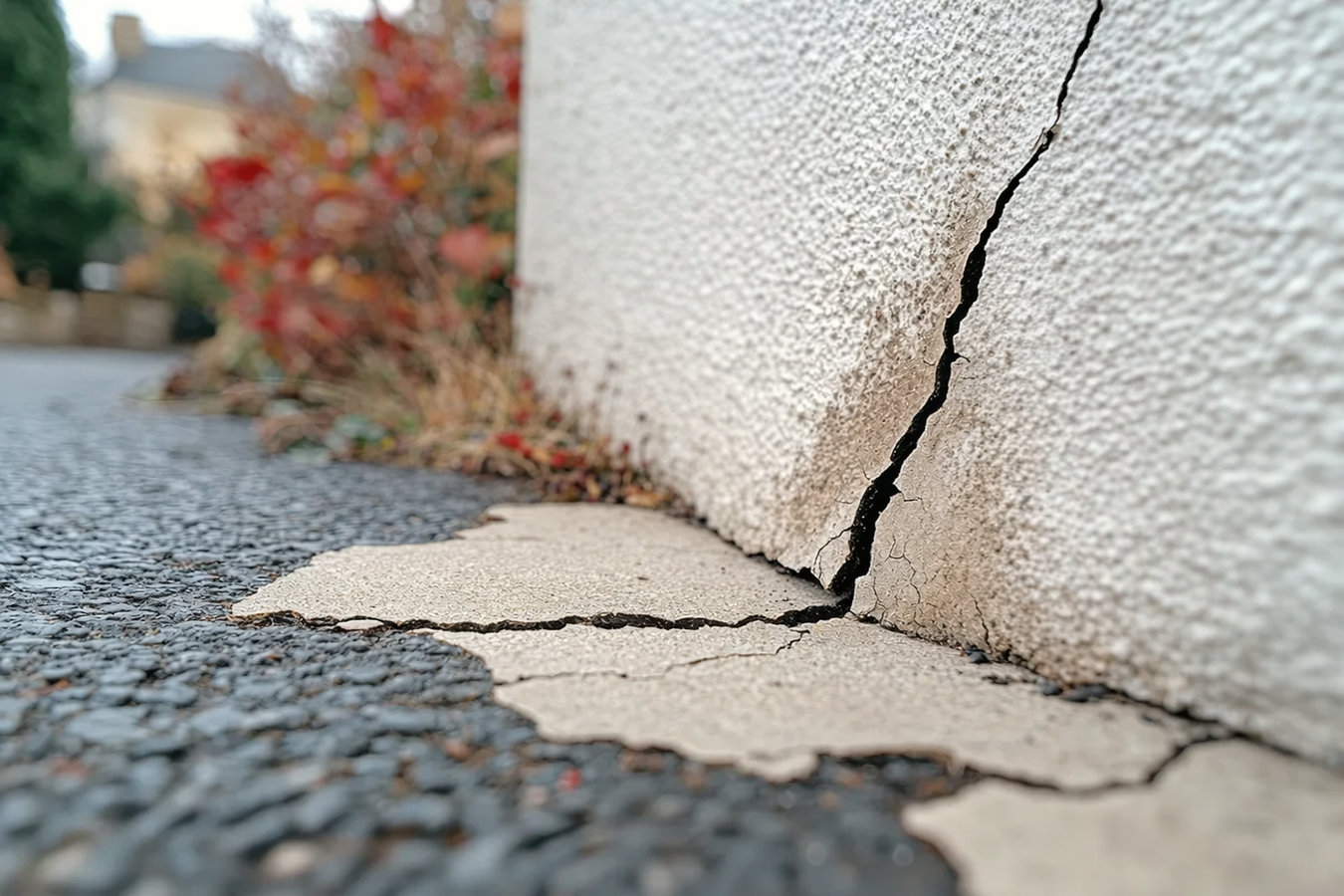
Diagonal cracks running from the corners of door frames, or long horizontal cracks near the base of exterior walls, are worth taking seriously. These cracks often appear or widen noticeably in late summer when Castro Valley's clay-heavy soils have contracted and pulled away from the foundation. A crack that is growing is more urgent than one that has been stable for years.
If furniture seems to tilt slightly or a ball placed on the floor rolls on its own, your floor may be following a foundation that has settled unevenly. This is especially common in Castro Valley homes built in the 1950s and 1960s, where original soil preparation standards were less rigorous than today. Uneven floors are a comfort issue now and a structural concern if left unaddressed.
Castro Valley's concentrated winter rainfall can expose drainage problems that accelerate foundation settling. If water collects against the base of your home during or after a storm rather than draining away, that moisture is soaking into the soil and driving the swelling-and-shrinking cycle that causes slabs to sink. Drainage correction is often part of the foundation raising solution.
We use both mudjacking and polyurethane foam injection depending on what your slab and soil conditions call for. Mudjacking pumps a cement-and-soil slurry beneath the concrete to fill voids and lift the slab - it is a proven method for larger residential areas where the extra material weight is not a concern. Polyurethane foam injection is lighter, cures in about 15 minutes, and puts less load on the clay soils underneath, making it well-suited to most Castro Valley residential situations. For properties that have experienced settling across a large concrete surface, our slab foundation building service can address areas where raising alone is not enough.
Every foundation raising job starts with an honest assessment of whether lifting is the right solution for your specific slab. If the concrete is too deteriorated to hold together after lifting, we will tell you that before any work starts - not after. We handle Alameda County permit applications for structural foundation work and schedule the required inspections through the county, since Castro Valley is unincorporated. The American Concrete Institute standards guide our material selection and process on every job. For drainage improvements needed alongside the lift, the Alameda County Community Development Agency handles permits for that scope of work as well.
Suits most Castro Valley residential slabs - lightweight material that cures fast, puts minimal additional load on clay soils, and produces a level surface the same day.
Suits larger areas or situations where the extra material density is appropriate - a time-tested approach for filling significant voids beneath sunken slabs.
Suits homeowners with a sunken garage floor or settled driveway section that has created a trip hazard or uneven approach to the house.
Suits homes where interior floors have developed a noticeable slope due to foundation settling beneath the living space.
Suits slabs that have opened up cracks during the settling process - once the slab is level, we seal and patch to restore the surface.
Castro Valley sits on expansive clay soils that behave differently from the stable ground contractors work with in other parts of the country. When winter rain arrives between November and April, that clay swells noticeably. When the long dry summer follows, it contracts and pulls away from whatever is resting on it. Over decades - and most Castro Valley homes are 50 to 70 years old - that cycle creates voids beneath slabs that lead to settling. The Hayward Fault nearby adds another layer of stress: small earthquakes that residents may not even feel can gradually shift soil and accelerate foundation movement. A contractor unfamiliar with these conditions may lift a slab without addressing the cause, and the problem comes back. We approach every job with drainage and soil stability in mind alongside the lifting work, because that is the only approach that holds up here. Homeowners in Hayward face similar clay soil conditions, and neighbors in San Leandro also deal with the same East Bay settling patterns we see throughout the region.
Because Castro Valley is an unincorporated community in Alameda County rather than an incorporated city, the permit and inspection process for structural foundation work runs through the county - not a city building department. Contractors who do not know this often delay projects or skip permits entirely, which creates real problems for homeowners when it comes time to refinance or sell. We handle the Alameda County process on your behalf from the start, so your project stays on schedule and your paperwork is in order. The best time to schedule foundation assessment is late summer or early fall, when soils are driest and settling is most visible - and before the next rainy season saturates the ground again.
When you call, we will ask a few quick questions - what symptoms you have noticed, how long they have been visible, and whether the issue is inside or outside the home. We respond within one business day and schedule a time to come out in person.
We walk the affected area, assess the slab condition, and check the drainage around your home. You get a written estimate before any work is agreed upon - no contractor should ask you to commit without putting the scope and price on paper first.
For structural foundation work in Castro Valley, we determine whether an Alameda County building permit is needed and handle the application. This step can add a few days to the schedule, but it protects your investment and keeps your home's records clean.
The crew drills small holes, injects the lifting material, and monitors the slab as it returns to level - typically one to three hours for a standard residential job. Holes are patched, the surface is cleaned, and we walk you through what to watch for going forward.
No obligation. We will assess your slab, explain what we found, and give you a written price - so you can decide with confidence.
(510) 973-2948Foundation raising only works if the concrete itself is still structurally sound. Before we quote a lifting job, we inspect the slab condition honestly and tell you whether raising is the right solution or whether a different approach makes more sense. A contractor who quotes lifting without first assessing the slab is one worth skipping.
Because Castro Valley is unincorporated, all structural foundation permits go through Alameda County - not a city office. We know the county process, pull the permit on your behalf, and schedule the required inspection. That documentation matters when you refinance or sell, and we make sure it is in place every time.
We use both polyurethane foam injection and cement-slurry mudjacking, and we recommend the method that fits your specific slab and soil conditions - not whatever is easiest for us. For most Castro Valley residential slabs on clay soil, foam is the better choice because it is lighter and cures faster, but we will explain the tradeoffs before any work starts.
Lifting a slab without fixing what caused the settling is a short-term fix. We flag drainage problems during the assessment and help you address them alongside the lifting work. The USGS documents how clay soil movement near the Hayward Fault accelerates foundation settling in the East Bay - managing water around your slab is the best thing you can do to protect the results long-term.
Every one of these points comes back to the same thing: we treat your foundation like a problem to solve, not a sale to close. Call us, describe what you are seeing, and we will give you a straight answer about what it means and what to do about it. (510) 973-2948
Precision cuts for driveway sections, drainage channels, or foundation openings - often needed alongside or after a slab lifting project.
Learn MoreFull-depth new concrete slab pours for areas where raising the existing concrete is not the right option.
Learn MoreCastro Valley's rainy season starts in November - lifting on dry soil produces better, longer-lasting results, so now is the right time to call.