Concrete Repair & Replacement
Fix damaged concrete or replace it completely when repair is not enough.
When Concrete Needs Help
Concrete lasts a long time, but it does not last forever. Cracks appear from settling soil, tree roots, or just age. Surfaces become uneven as sections sink or heave. Edges chip and crumble from impact and weathering. Sometimes you can repair these problems. Other times, replacement makes more sense. The key is knowing which approach will actually fix the issue and give you lasting results.
We have been repairing and replacing concrete in Castro Valley since 2024. Our experience helps us give you honest advice about whether repair or replacement is the better choice for your situation. Repair costs less initially but might not solve underlying problems. Replacement costs more upfront but gives you decades of trouble-free service. DAL Castro Valley Concrete evaluates your specific situation and recommends the approach that makes sense for your property and budget.
Common concrete problems include cracks from settling or shrinkage, sunken sections from soil erosion, spalling where the surface flakes off, and trip hazards where uneven sections create safety issues. We also fix damage from tree roots, poor drainage, and structural overload. Each problem has causes that need to be addressed, not just symptoms that get patched over. Our repairs address root causes so problems do not come back.
Repair vs. Replacement: How to Decide
Minor surface cracks less than a quarter inch wide can usually be repaired successfully. We clean out the crack, apply bonding agent, and fill with flexible crack filler or epoxy. These repairs prevent water intrusion and stop the crack from growing. For wider cracks or multiple cracks in one area, the underlying cause might be ongoing soil movement that repair alone will not solve.
Sunken concrete sections can sometimes be lifted with slab jacking, also called mud jacking or foam jacking. We drill small holes through the slab and pump material underneath to raise the concrete back to level. This works well when the concrete itself is still sound and only the base has settled. Slab jacking costs much less than replacement and causes minimal disruption to your property.
Replacement becomes necessary when concrete is severely cracked, badly spalled, or structurally compromised. If more than 30 percent of the surface has problems, replacement usually makes more sense than patching. Old concrete with multiple repairs starts looking like patchwork. A complete replacement gives you a fresh, uniform surface that will last another 20 to 30 years. We help you weigh the costs and benefits of each option.
Common Concrete Problems We Fix
- Cracks from settling, shrinkage, or structural movement
- Sunken or uneven sections creating trip hazards
- Spalling where the surface flakes, pits, or crumbles
- Damage from tree roots pushing up from below
- Poor drainage causing erosion under slabs
- Broken or damaged edges and corners
- Old, worn surfaces that have reached the end of service life
Do not ignore concrete problems. Small cracks let water underneath, leading to bigger issues. Uneven surfaces are trip hazards and liability concerns. Addressing problems early saves money and prevents worse damage down the road.
Our Repair Process
For crack repairs, we start by cleaning out all loose material and debris. The crack gets wire brushed or ground clean to expose sound concrete. We apply a bonding agent that helps new material stick to old. Then we fill the crack with appropriate filler material, chosen based on crack width and location. Surface cracks get filled flush and finished smooth. Structural cracks may need routing wider and filling with epoxy for maximum strength.
Spalling repairs involve chipping away all loose and damaged concrete until we reach sound material. The edges get undercut slightly so new concrete locks in mechanically. After cleaning and applying bonding agent, we fill the damaged area with repair mortar and finish it to match the surrounding surface. Quality repair products have come a long way in recent years and bond much better than they used to.
For sunken slabs, we use polyurethane foam injection to lift and level the concrete. Small holes get drilled through the slab, and we inject expanding foam underneath. The foam fills voids, compacts loose soil, and lifts the slab precisely to the height needed. The holes get patched, and the repair is done in hours rather than days. This method works great for driveway approach repairs and other situations where you need the surface usable quickly.
The Replacement Process
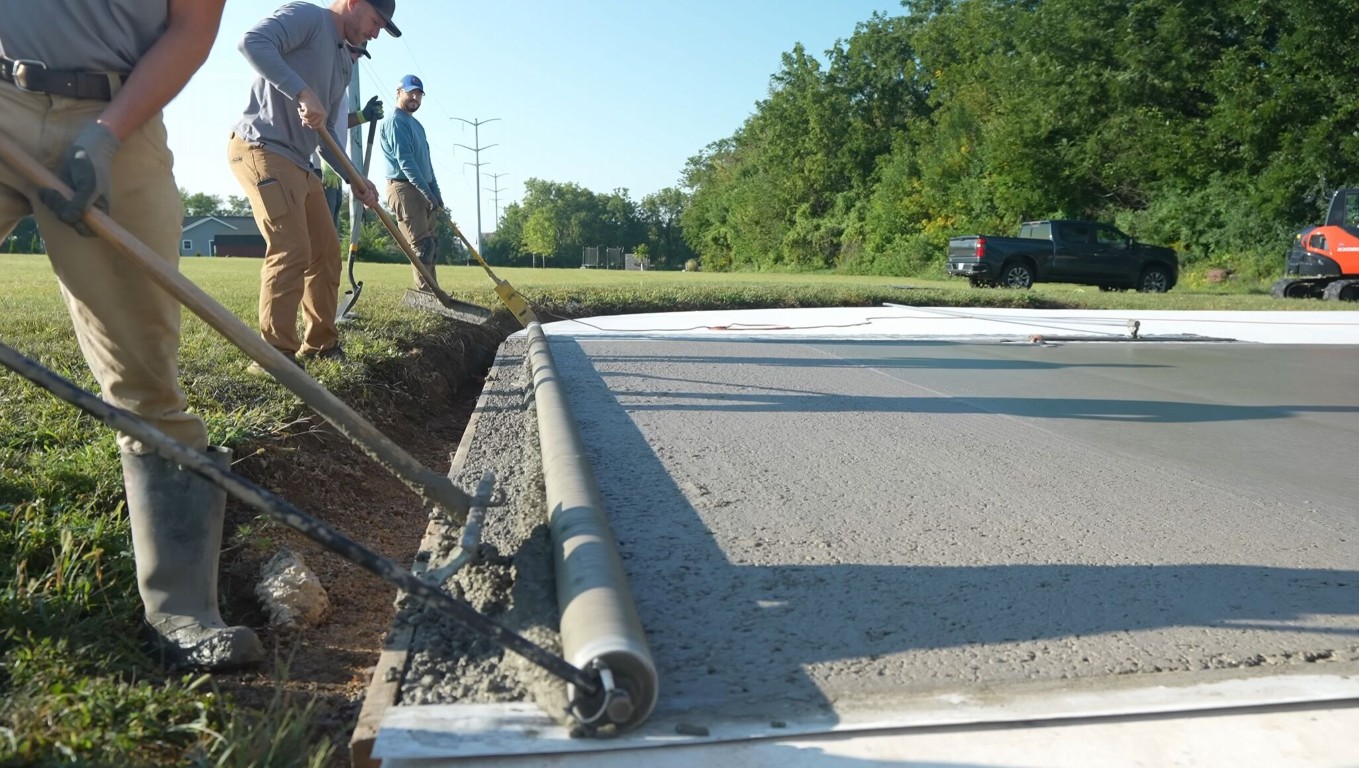
When replacement is needed, we can remove and replace just the damaged sections rather than your entire driveway or patio. This approach saves money while giving you new concrete where you need it. We saw cut around the damaged area to create clean edges. The old concrete gets broken up and hauled away. Then we prepare the base, install forms, and pour new concrete tied into the existing work.
Matching new concrete to old can be tricky. New concrete looks different in color and texture than old concrete that has weathered for years. We use techniques to help new sections blend better, including matching the finish texture, applying stains or tints, and using control joints strategically. While the match will never be perfect, experienced contractors can minimize the visual difference.
Complete replacement involves removing all the old concrete and starting fresh. This gives you the opportunity to fix underlying problems like poor drainage or inadequate base preparation. You can also upgrade to a thicker slab, add reinforcement, or change to a decorative finish. Many homeowners use replacement as a chance to improve their concrete surfaces rather than just duplicating what was there before.
Preventing Future Problems
Proper base preparation prevents most settling and sinking problems. When we do replacement work, we make sure the base is compacted and stable. Adding extra gravel thickness helps in areas with poor soil. Proper slope ensures water drains away rather than pooling and eroding the base. These preventive measures cost a bit more initially but save money by preventing future repairs.
Control joints are intentional weak points cut or formed into concrete. They control where cracks occur, making them follow straight lines rather than wandering randomly across the surface. Properly placed control joints can make the difference between minor cosmetic cracking and serious structural problems. We plan joint locations carefully based on slab dimensions and shape.
Regular maintenance extends concrete life. Seal cracks promptly to prevent water intrusion. Keep drainage working properly so water does not pool against concrete. Address tree root problems before they cause major damage. Clean and reseal decorative surfaces to protect them from moisture and stains. These simple steps help your concrete last its full expected lifespan.