Retaining Walls & Concrete Masonry
Structural walls and masonry work that controls slopes, prevents erosion, and adds usable space.
Why Retaining Walls Matter
Retaining walls hold back soil and control slopes on your property. They prevent erosion, create level areas for landscaping or construction, and protect foundations from soil pressure. In hilly areas like Castro Valley, retaining walls make sloped yards usable by creating terraces. They also add visual interest with planters, seating walls, and garden borders. The key is building walls that are both structurally sound and attractive.
We have been building retaining walls and masonry structures in Castro Valley since 2024. Our work includes everything from small garden walls a few feet high to major structural walls supporting driveways or foundations. Each project gets proper engineering attention to ensure the wall will stand up to soil pressure, water, and time. When you choose DAL Castro Valley Concrete for retaining wall construction, you get walls built right with proper drainage and reinforcement.
The height of your wall affects how it must be built. Low walls under 3 feet can often be simple gravity walls that rely on mass to resist soil pressure. Taller walls need proper footings, vertical reinforcement, and sometimes tie-backs into the hillside. Really tall walls over 6 feet may require engineering drawings and building permits. We assess your situation and design walls appropriate for the height and loads involved.
Types of Retaining Walls
Poured concrete retaining walls provide maximum strength and can be formed in virtually any shape. We build a footing below frost depth, set vertical rebar, and pour concrete forms. The wall can be left with a smooth finish, covered with stone veneer, or textured and colored. Poured walls work well for tall applications or when you need structural certainty. They cost more than some options but provide the strongest solution.
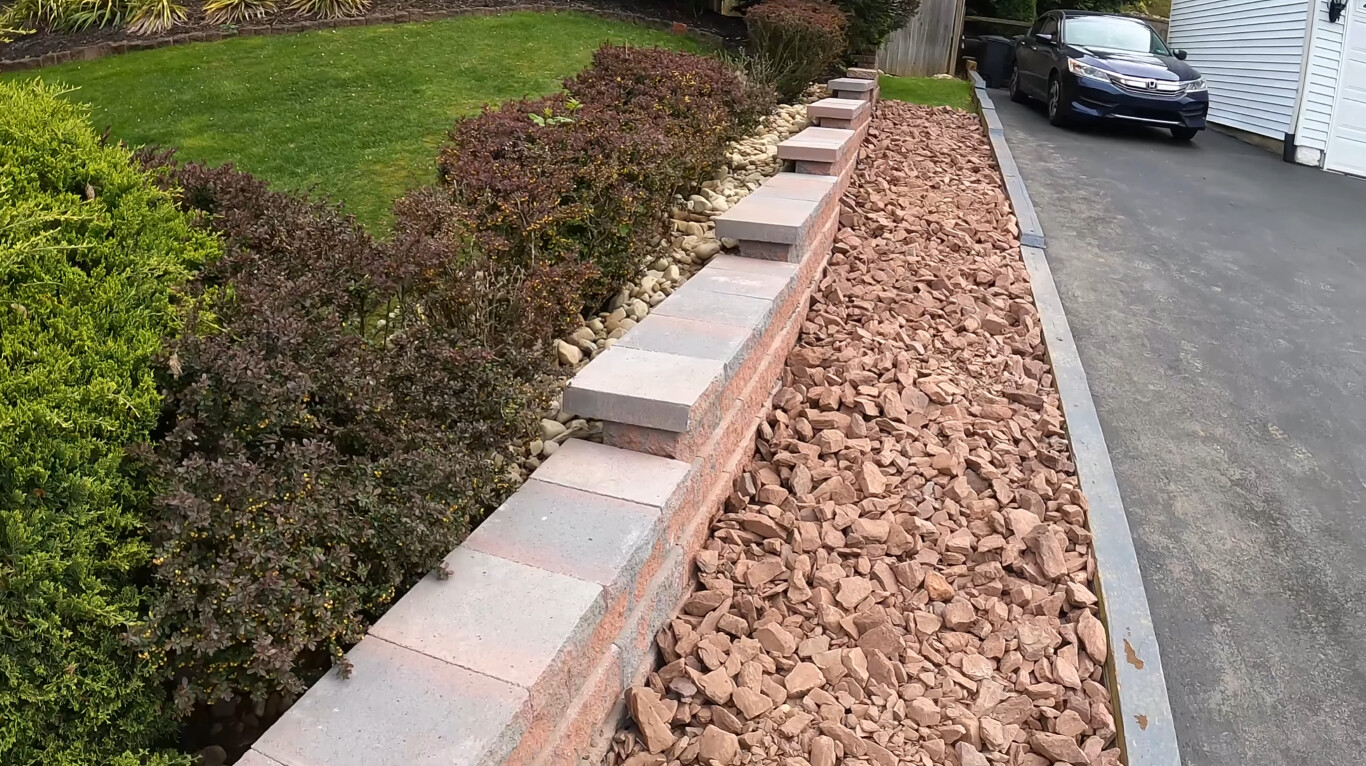
Concrete block retaining walls use interlocking blocks that stack without mortar in many cases. These modular systems come in various styles and colors. Installation is faster than poured walls, and the blocks have built-in setback to create a stable slope. Block walls work great for residential applications up to about 6 feet tall. They combine good looks with solid engineering at a reasonable cost.
Mortared block or stone walls provide traditional appearance and maximum customization. We build on concrete footings and stack blocks or natural stone with mortar joints. These walls can incorporate curves, steps, pillars, and other design elements. The work takes more time than other methods but creates one-of-a-kind results. Mortared walls suit formal landscapes and situations where appearance is a priority.
Retaining Wall Applications
- Hillside terracing to create level yard areas
- Driveway support walls to hold back slopes
- Foundation protection from soil pressure
- Garden beds and raised planters
- Erosion control on slopes and embankments
- Pool surrounds and multi-level patios
- Property line walls and boundary markers
Drainage is critical for retaining walls. Water pressure from saturated soil is the biggest threat to wall stability. Proper drainage behind the wall prevents this pressure from building up and protects your investment.
Engineering and Design
Every retaining wall must resist several forces. Soil pressure pushes outward and tries to tip the wall over. Water adds weight and pressure. Surcharge loads from slopes above the wall increase pressure. The wall design must account for all these forces and provide adequate strength. This is why taller walls need engineering rather than just building based on experience.
Footings provide the foundation for retaining walls. They must be below frost depth to prevent heaving, typically 18 to 24 inches deep in our area. Footing width depends on wall height and loads. Reinforcement in the footing ties into vertical reinforcement in the wall. For block walls, the footing might include dowels that fit into the blocks. Everything starts with a proper footing.
Drainage systems prevent water from building up behind walls. We install perforated drain pipes at the base of the wall, surrounded by gravel. The pipe carries water to drainage outlets at the ends or low points. Gravel backfill behind the wall allows water to drain down to the pipe rather than saturating the soil. Some situations also need weep holes through the wall face. Good drainage is not optional for retaining walls.
Construction Process
Building a retaining wall starts with excavation. We dig out for the footing and create room to work behind where the wall will be. The footing gets formed, reinforced, and poured. After the footing cures, we begin building the wall. For poured walls, this means setting forms and rebar, then pouring in lifts. For block walls, we lay courses checking level and alignment as we go.
As the wall goes up, we install drainage systems. Drain pipe gets placed at the footing level in a bed of gravel. More gravel goes behind the wall as backfill, creating a drainage zone. Some projects need filter fabric to prevent fine soil from clogging the gravel. Everything gets compacted in layers to prevent settling. This back-of-wall work is hidden but crucial to long-term performance.
Finishing work completes the project. For poured walls, we strip forms and finish the exposed surface. This might include applying veneer, texturing, or just cleaning and sealing. Block walls may need caps installed on top for a finished look. We clean up all excess materials and grade the area above and below the wall for proper drainage. The result is a wall that is both functional and attractive.
Masonry Work Beyond Walls
Our masonry skills extend beyond retaining walls to other concrete block and stone work. We build decorative garden walls that define spaces without retaining soil. Freestanding walls provide privacy screening or mark property boundaries. These walls still need proper footings and construction but do not deal with the same soil pressure as retaining walls.
Concrete block is versatile for many applications. We use it for foundation walls, equipment enclosures, trash enclosures, and structural walls in buildings. Block can be left exposed with natural or colored faces, painted, or veneered with stone or brick. The modular nature of block makes it economical and relatively fast to build with while still providing strength and fire resistance.
Outdoor fireplaces, fire pits, and built-in barbecues are popular masonry projects. These features create outdoor living spaces and increase property value. We build the structure with appropriate materials for heat exposure. Fireboxes get lined with firebrick, and chimneys get properly vented. These projects combine patio work with masonry construction to create complete outdoor entertainment areas.
Maintenance and Repairs
Properly built retaining walls need little maintenance. Check drainage outlets periodically to make sure they are not clogged. Keep plantings trimmed away from the wall face so roots do not grow into joints. Seal the wall every few years if it is porous block or stone to prevent water absorption and freeze-thaw damage. Simple attention prevents most problems.
Signs of wall problems include tilting, cracking, bulging, or separation from adjoining sections. These symptoms mean the wall is experiencing more pressure than it was designed for, or drainage has failed. Do not ignore these warning signs. Small problems get worse over time and become more expensive to fix. We can assess problem walls and recommend whether repair or replacement is needed.
Wall repairs might involve improving drainage, adding reinforcement, or rebuilding failed sections. Sometimes the original wall was not built adequately for the height or loads. In those cases, proper rebuilding is the only real solution. We evaluate retaining wall issues honestly and recommend repairs that will actually solve problems rather than just temporarily patching them.